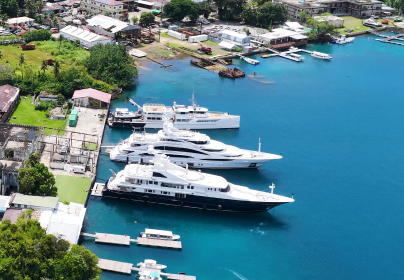
The Evolution of Modern Shipbuilding

Introduction
Shipbuilding has played a fundamental role in the development of human civilization for thousands of years. From the earliest wooden boats used for fishing and transportation to today’s highly sophisticated cargo vessels, cruise ships, and naval fleets, the industry has continuously evolved to meet changing economic, technological, and environmental demands. Modern shipbuilding is no longer solely about constructing large steel structures; it is a multidisciplinary field that combines naval architecture, mechanical engineering, electrical systems, automation, digital technologies, and sustainable manufacturing practices.
As international trade continues to expand, more than 80 percent of global merchandise is transported by sea. This growing demand has encouraged shipbuilders to adopt innovative technologies that improve efficiency, reduce production costs, and enhance vessel performance. Today’s shipyards utilize robotics, artificial intelligence, digital twins, and advanced simulation software to design and construct vessels with unprecedented precision.
This article explores the evolution of modern shipbuilding, highlighting its historical development, technological breakthroughs, manufacturing processes, and future trends that continue to shape the global maritime industry.
The Origins of Shipbuilding
The history of shipbuilding dates back thousands of years. Ancient civilizations including the Egyptians, Greeks, Phoenicians, and Chinese built wooden vessels primarily for transportation, trade, fishing, and military purposes. Early shipbuilders relied heavily on manual craftsmanship and local materials such as timber, rope, and natural fibers.
As maritime trade expanded during the Middle Ages, ships became larger and more sophisticated. European nations invested heavily in ship construction to support exploration and naval power. Skilled craftsmen developed advanced woodworking techniques that improved structural strength and seaworthiness.
Although these early ships lacked modern technology, they laid the foundation for today’s naval architecture and marine engineering principles.
The Industrial Revolution Changed Everything
The Industrial Revolution marked one of the most significant turning points in shipbuilding history. During the nineteenth century, wooden hulls gradually gave way to iron and later steel construction. Steam engines replaced sails, allowing ships to travel faster and more reliably regardless of wind conditions.
Steel offered numerous advantages over wood. It provided greater structural strength, increased durability, improved fire resistance, and allowed ships to become significantly larger. Shipyards also introduced mechanized production methods, increasing manufacturing efficiency while reducing construction time.
These innovations transformed shipbuilding into a modern industrial sector capable of supporting rapidly growing international commerce.
Modern Shipbuilding Technologies
Today’s shipbuilding industry integrates numerous advanced technologies throughout every stage of vessel development.
Computer-Aided Design (CAD) software allows engineers to create highly detailed three-dimensional ship models before construction begins. These digital models help identify potential design issues early, reducing costly modifications during production.
Computer-Aided Manufacturing (CAM) systems enable automated cutting, welding, and assembly of steel components with exceptional precision.
Robotic welding systems have become common in large shipyards. Automated welding improves consistency, reduces human error, enhances workplace safety, and increases production speed.
Digital twin technology is another major innovation. A digital twin creates a virtual replica of a vessel that continuously receives operational data after delivery. Engineers can monitor equipment performance, predict maintenance requirements, and optimize operational efficiency throughout the ship’s lifecycle.
Artificial intelligence is increasingly being used to improve production scheduling, supply chain management, quality control, and predictive maintenance.
Modular Construction Methods
One of the most important advances in modern shipbuilding is modular construction.
Instead of building an entire ship from the keel upward, shipyards fabricate large sections, or modules, independently. Each module may include structural steel, piping systems, electrical wiring, insulation, and interior components before final assembly.
Once completed, heavy-lift cranes position these modules into place where they are joined together.
Modular construction provides numerous benefits:
- Shorter production schedules
- Improved quality control
- Reduced labor costs
- Safer working conditions
- Greater manufacturing flexibility
Many of the world’s leading shipbuilders rely heavily on modular construction to increase efficiency while maintaining consistent quality standards.
Sustainability in Shipbuilding
Environmental responsibility has become a major priority within the maritime industry.
Governments and international organizations have introduced increasingly strict environmental regulations aimed at reducing greenhouse gas emissions, improving fuel efficiency, and minimizing marine pollution.
Shipbuilders now focus on designing vessels that consume less fuel while producing fewer emissions.
Common sustainable technologies include:
- LNG-powered propulsion systems
- Hybrid electric propulsion
- Battery-assisted vessels
- Hydrogen fuel research
- Wind-assisted propulsion
- Advanced hull optimization
- Energy-efficient propellers
- Waste heat recovery systems
In addition to cleaner propulsion technologies, shipyards are reducing their own environmental impact by recycling steel, minimizing waste, conserving water, and improving energy efficiency throughout manufacturing operations.
Green shipbuilding has become both an environmental necessity and a competitive advantage.
Digital Transformation in Shipyards
Industry 4.0 has significantly transformed modern shipyards.
Sensors installed throughout production facilities collect real-time information regarding equipment status, production progress, inventory levels, and worker safety.
Cloud computing enables engineers, suppliers, and project managers to collaborate across multiple locations using shared digital platforms.
Augmented Reality (AR) assists technicians during equipment installation by overlaying digital instructions onto physical components.
Virtual Reality (VR) is increasingly used for employee training, vessel inspections, and design reviews.
Big data analytics helps shipbuilders optimize production schedules, reduce delays, improve resource allocation, and enhance decision-making.
Together, these technologies create smarter, more connected shipyards capable of delivering complex vessels more efficiently than ever before.
Quality Control and Safety
Quality assurance is essential throughout every stage of ship construction.
Modern shipyards implement comprehensive inspection procedures including:
- Ultrasonic testing
- Radiographic inspection
- Magnetic particle testing
- Laser measurement
- Pressure testing
- Dimensional verification
International classification societies establish strict technical standards that ensure vessels meet structural, operational, and safety requirements before entering service.
Worker safety is equally important. Shipyards invest heavily in protective equipment, safety training, automated lifting systems, ventilation technologies, and digital monitoring systems that reduce workplace accidents.
Maintaining high quality standards not only protects human lives but also improves vessel reliability and long-term operating performance.
Challenges Facing the Industry
Despite remarkable technological progress, shipbuilding continues to face several significant challenges.
Global supply chain disruptions can delay material deliveries and increase production costs.
The shortage of highly skilled engineers, welders, electricians, and marine technicians has become a growing concern in many countries.
Rapidly changing environmental regulations require continuous investment in research and development.
Shipbuilders must also remain competitive while balancing rising labor costs, fluctuating steel prices, and increasing customer expectations regarding delivery schedules and vessel performance.
Cybersecurity has emerged as another important issue as more production systems become digitally connected.
Successfully addressing these challenges will require ongoing innovation, workforce development, and international collaboration.
Future Trends in Shipbuilding
The future of shipbuilding is expected to be increasingly digital, automated, and environmentally sustainable.
Autonomous vessels capable of operating with minimal human intervention are already under development.
Artificial intelligence will continue improving ship design, route optimization, predictive maintenance, and manufacturing efficiency.
Alternative fuels such as hydrogen, ammonia, methanol, and advanced biofuels may significantly reduce maritime carbon emissions over the coming decades.
Three-dimensional printing could revolutionize spare parts manufacturing by enabling rapid on-site production of customized components.
Smart shipyards will become more interconnected through industrial Internet of Things (IIoT) technologies, allowing real-time coordination between suppliers, production facilities, and shipping companies.
These innovations promise to reshape the maritime industry while improving safety, efficiency, and environmental performance.
Conclusion
Modern shipbuilding has evolved far beyond traditional craftsmanship into one of the world’s most technologically advanced manufacturing industries. Advances in digital engineering, automation, robotics, modular construction, and sustainable design have transformed how ships are designed, built, and maintained.
As global trade continues to depend heavily on maritime transportation, the shipbuilding industry will remain a cornerstone of economic development and international commerce. By embracing innovation while addressing environmental and operational challenges, modern shipbuilders are creating safer, smarter, and more sustainable vessels capable of meeting the demands of future generations.
The continued integration of advanced engineering, digital technologies, and green manufacturing practices ensures that shipbuilding will remain a dynamic industry driving progress across the global maritime sector for decades to come.