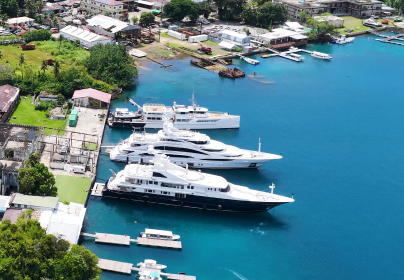
Types of Commercial Ships and Their Construction

Introduction
Commercial shipping is the backbone of international trade, carrying nearly 90% of global cargo by volume. Every day, thousands of vessels transport raw materials, manufactured goods, energy resources, vehicles, food products, and consumer goods across oceans and waterways. Behind every successful voyage is a carefully engineered ship designed to meet specific operational requirements.
Unlike recreational or naval vessels, commercial ships are built with efficiency, safety, cargo capacity, and cost-effectiveness as primary objectives. Different types of cargo require different ship designs, which has led to the development of specialized vessels such as container ships, bulk carriers, oil tankers, liquefied gas carriers, and roll-on/roll-off (Ro-Ro) ships.
Modern shipbuilding combines advanced engineering, digital design software, automation, and strict international regulations to ensure that commercial vessels perform reliably under demanding conditions. This article examines the major types of commercial ships, their construction methods, key design features, and the technologies that make global maritime transportation possible.
The Importance of Commercial Shipbuilding
Commercial shipbuilding is one of the world’s largest industrial sectors. It supports international trade, creates millions of jobs, and contributes significantly to national economies.
Modern shipyards manufacture vessels that are designed to:
- Transport cargo safely
- Reduce fuel consumption
- Increase operational efficiency
- Meet environmental regulations
- Maximize cargo capacity
- Minimize maintenance costs
- Operate reliably for decades
Each vessel is carefully engineered according to its intended cargo, trading routes, and operational requirements.
Container Ships
Container ships are among the most recognizable vessels in global shipping. They transport standardized shipping containers that can be easily transferred between ships, trucks, and trains.
Design Characteristics
Container ships feature:
- Long, narrow hulls
- Large open cargo holds
- Cell guides for securing containers
- Powerful propulsion systems
- Wide deck areas for additional containers
Their design allows thousands of containers to be loaded and unloaded quickly using port cranes.
Construction Process
Building a container ship requires extremely strong structural support because containers create concentrated loads.
Engineers use high-strength steel to construct:
- Double-bottom structures
- Cargo holds
- Deck reinforcements
- Hatch covers
- Ballast tanks
Advanced structural analysis ensures the hull can withstand heavy cargo loads and rough ocean conditions.
Bulk Carriers
Bulk carriers transport unpackaged dry cargo such as coal, grain, iron ore, cement, fertilizer, and minerals.
Unlike container ships, bulk carriers feature large cargo holds designed for loose materials.
Design Features
Bulk carriers typically include:
- Large cargo hatches
- Reinforced cargo holds
- Double-side hull structures
- Ballast systems
- Heavy-duty loading equipment
The cargo distribution must be carefully managed to maintain vessel stability throughout the voyage.
Construction Considerations
Because bulk cargo can shift during transport, engineers design strong internal structures capable of resisting dynamic loads.
Corrosion protection is particularly important since many bulk materials contain moisture or chemicals that may damage steel surfaces over time.
Oil Tankers
Oil tankers transport crude oil, refined petroleum products, and various liquid chemicals across international markets.
They are among the largest ships ever constructed.
Structural Design
Modern oil tankers feature:
- Double hull construction
- Multiple cargo tanks
- Pumping systems
- Cargo piping networks
- Inert gas systems
- Fire protection equipment
Double hulls significantly reduce the risk of oil spills following collisions or groundings.
Safety Requirements
Due to the hazardous nature of petroleum products, tanker construction emphasizes:
- Explosion prevention
- Fire suppression
- Leak detection
- Structural integrity
- Environmental protection
Strict international regulations govern every aspect of tanker design and operation.
Liquefied Natural Gas (LNG) Carriers
As cleaner energy sources become increasingly important, LNG carriers have become one of the fastest-growing segments of commercial shipbuilding.
These specialized vessels transport natural gas that has been cooled to approximately -162°C, reducing its volume dramatically.
Unique Construction Features
LNG carriers include:
- Cryogenic storage tanks
- High-performance insulation
- Advanced temperature monitoring
- Specialized piping systems
- Boil-off gas management
Constructing these vessels requires exceptional engineering precision due to the extremely low storage temperatures.
Advanced materials help maintain structural integrity under demanding operating conditions.
Roll-on/Roll-off (Ro-Ro) Ships
Ro-Ro vessels transport wheeled cargo such as automobiles, trucks, buses, trailers, and heavy construction equipment.
Instead of cranes, vehicles simply drive on and off the ship using ramps.
Main Characteristics
Ro-Ro ships include:
- Multiple vehicle decks
- Internal ramps
- Adjustable deck heights
- High-capacity ventilation systems
- Vehicle securing equipment
These ships enable rapid loading and unloading, making them highly efficient for vehicle transportation.
Construction Challenges
Engineers must carefully balance deck strength with lightweight construction to maximize cargo capacity while maintaining vessel stability.
Fire safety systems are especially important because vehicles often contain fuel.
General Cargo Ships
Although specialized vessels dominate modern shipping, general cargo ships remain important for transporting a wide variety of goods.
They typically carry:
- Machinery
- Steel products
- Timber
- Packaged goods
- Industrial equipment
- Construction materials
These ships provide flexibility for cargo that does not fit standard containers or bulk handling systems.
Modern general cargo vessels often include onboard cranes, allowing them to operate in ports with limited cargo handling infrastructure.
Ship Construction Process
Regardless of vessel type, commercial ship construction follows a structured sequence.
Design and Engineering
Naval architects develop detailed digital models that define:
- Hull geometry
- Structural strength
- Stability
- Machinery layout
- Electrical systems
- Safety equipment
Computer simulations verify performance before construction begins.
Steel Fabrication
Large steel plates are cut using automated CNC machines.
Components are welded into sections using robotic welding systems that ensure high precision and consistent quality.
Modular Assembly
Most commercial ships are built using modular construction.
Entire sections—including piping, electrical systems, insulation, and machinery—are assembled separately before being joined together in dry docks.
This approach shortens construction time and improves quality control.
Outfitting
After the hull is assembled, workers install:
- Engines
- Propellers
- Navigation systems
- Accommodation areas
- Cargo equipment
- Safety systems
- Electrical networks
Every component undergoes rigorous testing before sea trials.
Safety and Classification Standards
Commercial ships must comply with strict international safety standards.
Classification societies inspect vessels throughout construction to verify structural integrity and equipment quality.
Important inspection areas include:
- Hull strength
- Welding quality
- Machinery installation
- Electrical systems
- Fire protection
- Lifesaving equipment
- Stability performance
Sea trials confirm that every vessel meets operational requirements before entering commercial service.
Modern Technologies in Commercial Shipbuilding
Shipbuilders increasingly rely on advanced digital technologies to improve production efficiency.
Some of the most important innovations include:
- Computer-Aided Design (CAD)
- Digital Twin technology
- Artificial Intelligence
- Robotics
- Internet of Things (IoT)
- Automated welding
- Laser measurement systems
- 3D scanning
- Predictive maintenance software
These technologies reduce construction time while improving product quality and operational reliability.
Future Trends
Commercial shipbuilding continues to evolve rapidly as environmental regulations and customer expectations change.
Future vessels are expected to feature:
- Hydrogen propulsion
- Ammonia-powered engines
- Battery-electric systems
- Autonomous navigation
- Smart cargo monitoring
- AI-assisted maintenance
- Wind-assisted propulsion
- Carbon capture technologies
- Advanced lightweight materials
- Highly automated shipyards
These innovations aim to improve fuel efficiency, reduce emissions, and enhance overall operational performance.
Conclusion
Commercial ships are the foundation of global trade, enabling the efficient movement of goods across continents. Each vessel type—from container ships and bulk carriers to oil tankers, LNG carriers, and Ro-Ro ships—is specifically designed to meet unique transportation requirements while maximizing safety, efficiency, and profitability.
Modern shipbuilding combines advanced engineering, digital technologies, automation, and strict international standards to construct vessels capable of operating reliably in some of the world’s most demanding environments. As the maritime industry embraces cleaner fuels, smarter manufacturing, and digital innovation, commercial ship construction will continue evolving to support sustainable global logistics.
The future of commercial shipbuilding lies in intelligent design, environmentally responsible engineering, and continuous technological advancement, ensuring that maritime transportation remains one of the most efficient and dependable pillars of the global economy.